
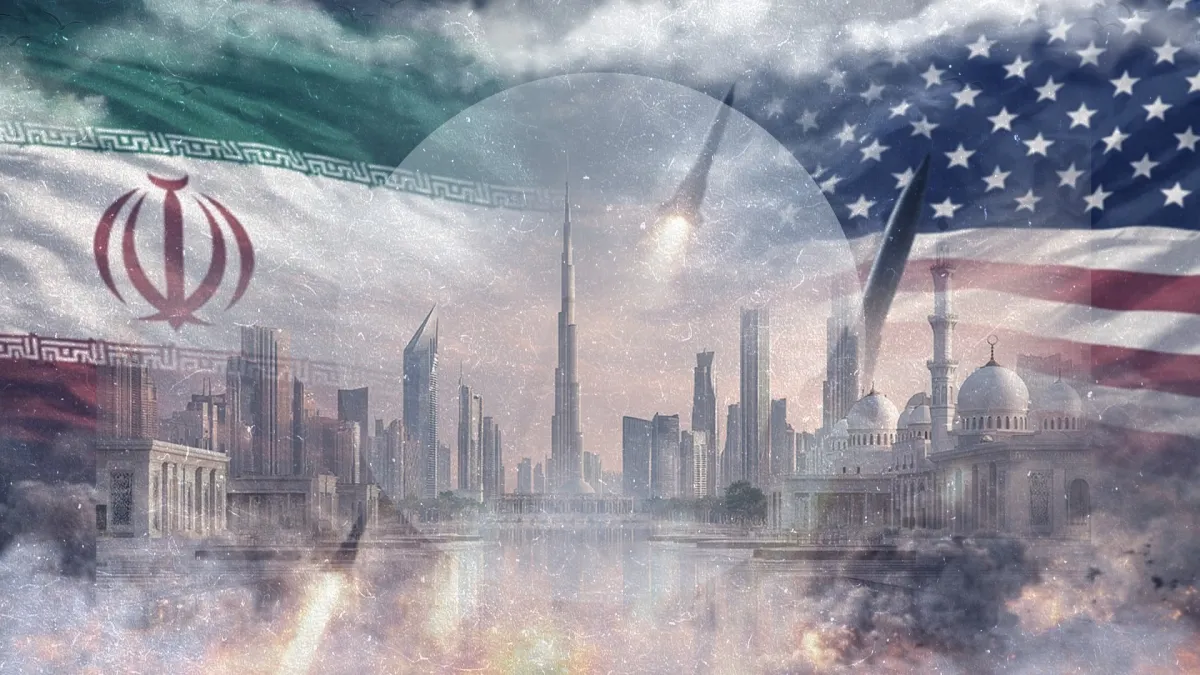
The situation in the Middle East has reached a critical point as the U.S. escalates conflict with Iran, raising global concerns about the possibility of a broader regional war. Recent military actions and rising hostilities have intensified tensions, drawing international attention and prompting urgent diplomatic responses.
Officials in Washington have confirmed increased military coordination with regional allies, signaling a shift toward a more aggressive stance aimed at deterring further threats from Tehran.
Rising military operations in the region
The decision as the U.S. escalates conflict with Iran comes amid a series of military operations targeting strategic positions linked to Iranian forces and allied groups.
Pentagon sources indicate that recent strikes were designed to disrupt supply chains and weaken operational capabilities of Iran-backed militias operating across the region.
Popular



 Situación política y económica de Venezuela 2026: un país en transición
These developments follow months of growing friction, including attacks on commercial vessels and military installations in key waterways.
Iran responds with warnings and countermeasures
Iranian authorities have issued strong warnings in response to the escalating actions, signaling that any further aggression could trigger retaliation.
Military officials in Tehran have emphasized their readiness to defend national interests, while also accusing the United States of destabilizing the region.
Analysts suggest that the risk of miscalculation remains high, particularly as both sides increase their military presence.
Strategic alliances and regional implications
As the U.S. escalates conflict with Iran, alliances in the Middle East are becoming increasingly significant.
Countries such as Israel and several Gulf states are closely coordinating with Washington, reinforcing joint defense strategies and intelligence-sharing mechanisms.
This alignment reflects shared concerns over Iran’s regional influence and its support for armed groups in neighboring countries.
Impact on global oil markets
One of the most immediate consequences of the escalating conflict has been volatility in global energy markets.
Oil prices have surged amid fears of disruptions in key supply routes, particularly in the Strait of Hormuz—a critical passage for global oil shipments.
Energy analysts warn that prolonged instability could lead to sustained price increases, affecting economies worldwide.
Diplomatic efforts struggle to keep pace
Despite the escalation, diplomatic channels remain open, with several international actors urging restraint.
Efforts by European nations and international organizations aim to de-escalate tensions and prevent a full-scale conflict.
However, progress has been limited as both Washington and Tehran maintain firm positions on security and strategic interests.
Security concerns for U.S. personnel abroad
The escalation has also raised concerns about the safety of U.S. personnel stationed across the Middle East.
Military bases and diplomatic missions have increased security measures, while contingency plans are being reviewed in case of further attacks.
Officials have not ruled out additional troop deployments if the situation continues to deteriorate.
Domestic implications in the United States
Back home, the developments have sparked political debate over foreign policy and military engagement.
Lawmakers are divided on the appropriate response, with some advocating for restraint and others supporting stronger action against perceived threats.
Public opinion remains mixed, reflecting broader concerns about the potential costs of another prolonged conflict.
Risk of a broader regional war
Experts warn that the current trajectory could lead to a wider conflict involving multiple actors.
The presence of various armed groups and competing interests in the region increases the complexity of the situation.
A single incident could potentially trigger a chain reaction, drawing additional countries into the conflict.
Economic and geopolitical consequences
Beyond immediate security concerns, the escalation could have long-term geopolitical implications.
Global markets are already reacting to uncertainty, with fluctuations in energy, defense, and investment sectors.
Additionally, the conflict may influence diplomatic relations between major world powers, including Russia and China.
What comes next?
As the U.S. escalates conflict with Iran, the international community is closely monitoring developments.
Key questions remain about whether tensions will continue to rise or if diplomatic efforts can successfully prevent further escalation.
The coming weeks are expected to be critical in determining the direction of the conflict.
Conclusion
The decision as the U.S. escalates conflict with Iran marks a pivotal moment in global geopolitics, with far-reaching implications for regional stability and international security.
While military actions continue, the need for diplomatic solutions has never been more urgent. The outcome of this crisis will likely shape the geopolitical landscape for years to come.

3 thoughts on “U.S. escalates conflict with Iran as tensions rise in the Middle East”